
The Power of Habits
Table of Contents
📖 Book Review – November 2024
Title: The Power of Habits
Author: Charles Duhigg
Finished on: 2024-11-18
Why I Read It
Well, habits are something we can always improve, and since my last reading about it (Atomic Habits), I wanted to read another book on the topic.
The Habit Loop
How Habits Work
The basal ganglia stores habits.
The process that transforms an action into an automatic routine is called "chunking."
- It forms the foundation of how habits emerge.
Habits exist because the brain is constantly looking for ways to save effort.
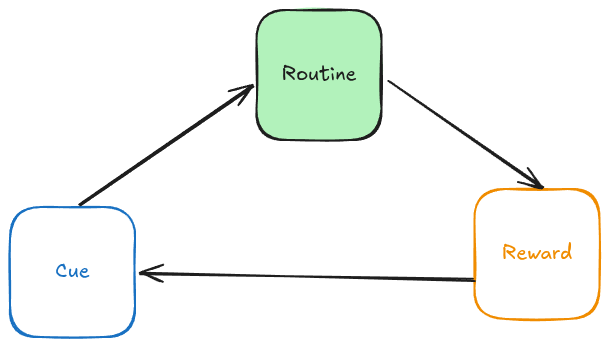
The habit loop illustrates how a habit functions:
- Cue (Trigger)
- Routine
- Reward
This process becomes more and more automatic over time.
Habits can form even without our conscious permission.
For example: eating fast food once a month can easily turn into a weekly pattern.
Learning to identify the cue and the reward allows us to change the routine, and thus transform a habit.
The Cravings of the Brain
How to Create New Habits
Create a craving - this is what drives the habit loop
(see #1 - The Habit Loop)
- Identify a simple and distinctive cue
- Clearly define the reward
Habits create a neurologically embedded craving.
To form new habits:
Cue + Routine + Reward + Reinforced Craving
Simply having a cue and a reward is not enough.
Only when the brain starts expecting the reward - and releases endorphins in anticipation - does the behavior become automatic.
Craving is the essential force behind new habits.
The Golden Rule of Habit Change
Why Change Is Possible
To change a habit: keep the cue and reward, but change the routine.
Real habit change requires effort and understanding of the underlying craving.
Many habits can be changed by keeping the cue and reward the same but altering the routine.
However, truly overcoming deep or destructive habits often requires something more: belief.
- Belief that change is possible
- Belief that one can get better
- Belief that life can improve
Belief is often the key ingredient in lasting transformation.
Keystone Habits or the Ballad of Paul O'Neill
The Habits That Matter Most
Keystone habits create small wins - seemingly minor improvements that trigger powerful ripple effects.
When you build new structures around these habits, they can influence and transform other behaviors.
Small wins lead to big change.
For example:
Developing the habit of eating healthy can improve:
- Physical health
- Energy levels
- Confidence
- Focus
Changing one habit can cascade into other positive behaviors.
Starbucks and the Culture of Success
When Willpower Becomes Automatic
Willpower is one of the most important keystone habits for personal success.
It's a learnable skill, not a fixed trait.
While competence remains stable over time, willpower fluctuates.
- Some days you feel motivated to go running - other days, not at all.
At Starbucks, employees are taught strategies to strengthen self-discipline:
LATTE - Listen, Acknowledge, Take action, Thank, and Explain.
Recognizing critical moments and applying a prepared method helps reinforce willpower.
When people act out of self-choice rather than obedience, self-control feels less exhausting.
People want to feel in control of their lives, not controlled by others.
The Power of a Crisis
How Leaders Create Habits by Chance and Design
Crises can reshape organizational habits - they force change where comfort once prevented it.
A company functions effectively only when its management consciously builds and reinforces habits.
Crisis is often the catalyst for transformation.
How Target Knows What You Want Before You Do
When Companies Predict Habits
Companies like Target collect customer data and assign unique IDs to predict behavior - such as identifying when a woman is pregnant based on her purchase patterns.
Habits influence nearly every buying decision we make.
Shopping habits often change after major life events (moving, marriage, divorce, etc.).
Humans have a deep preference for familiarity.
Behavioral habits protect us from being overwhelmed by constant decisions.
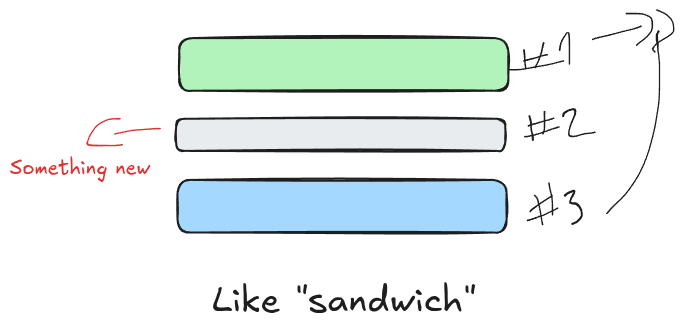
To teach someone a new habit → link it with something familiar.
Introduce new behaviors by blending them with existing habits - people accept the "new" more easily.
The Saddleback Church and the Montgomery Bus Boycott
How Movements Emerge
Social habits - the unconscious behaviors shared by many people - can quietly reshape the world.
Movements begin with friendships and spread through "weak ties" - connections that are neither strangers nor close friends.
Social pressure and group habits lead individuals to follow group expectations.
These patterns often spread through weak social links.
Movements grow from social habits that begin as friendships and evolve into shared beliefs.
The Neurology of Free Will
Are We Responsible for Our Habits?
We can change our habits once we understand how they work and decide to take responsibility.
Awareness brings responsibility.
Once you recognize a habit, you are accountable for changing it.
How to Change Your Own Habits
There is no single formula for behavior change.
Steps to Change a Habit
- Identify the routine
- Experiment with rewards (try different ones)
- Isolate the cue
- Create a plan
To understand a habit, analyze the elements of the habit loop:
Experiment with Rewards
Rewards are powerful because they satisfy deep cravings - whether for pleasure, relief, or emotional comfort.
Test different rewards to discover what truly drives the behavior.
Isolate the Cue
Why and through what is the habit triggered?
Common cue categories:
- Location
- Time
- Emotional state
- Other people
- Immediately preceding action
Example:
- I'm sitting at my desk
- It's 3:36 PM
- I feel bored
- I'm alone
- I just answered an email
Create a Plan
A habit follows a predictable formula your brain automatically executes:
When I see a cue, I perform a routine to get a reward.
To change or build a habit, use implementation intentions - concrete "if-then" plans.
Example:
Every day at 7:00 AM, I will go to the park and run for 20 minutes.
Personal Reflection
It was nice to read something about habits again. I had already heard about many of the things in the book "Atomic Habits." Nevertheless, there were some new aspects that I found interesting. As for whether it helped me change my habits, I would say this: "Atomic Habits" did a very good job of presenting various methods for building new habits, such as "implementation intentions," but this book also focuses very well on changing current "bad" habits and, moreover, on how the world "ticks".
Would I Recommend It?
Yes, sure, go for it.
Looking Ahead
The next book in 2025 is from Jordan B. Peterson called "12 Rules of Life". I am not sure if I will summarize it. Other books would be:
- A Brief History of Time from Stephen Hawking - no summary here
- Das einzige Buch, das Du über Finanzen lesen solltest a German book about finance - probably will do a short summary here :)