
The Power of Habits
Table of Contents
Habits
We all know them well - habits define how we live. Integrated into our daily lives, many habits are "invisible": they happen automatically, without us even noticing. Think about it - when you feel thirsty, do you consciously think, ""Now I have to drink water," or do you just do it? It's become natural. The same goes for brushing your teeth in the morning or before bed. These are repeated actions that have become automatic routines. But how are they actually created?
How Are Habits Created?
Before diving into the various models that explain how habits form, here's a quick explanation of why they exist in the first place:
Habits form as our brain's way of handling repetitive tasks automatically, freeing up mental energy for more complex challenges.
For example, if you want to read every day, you don't want to waste mental energy just remembering to grab the book. You want to save that energy for actually reading and understanding it. That's why habits form - to help you focus on what really matters, instead of the setup.
Now to the interesting part:
- How do habits form?
- Is there a model that explains it?
Yes - several.
The Habit Loop (Feedback Loop)
The habit loop, or feedback loop, is the foundation of habit formation. It explains how habits work. According to Atomic Habits by James Clear, there are four key steps:
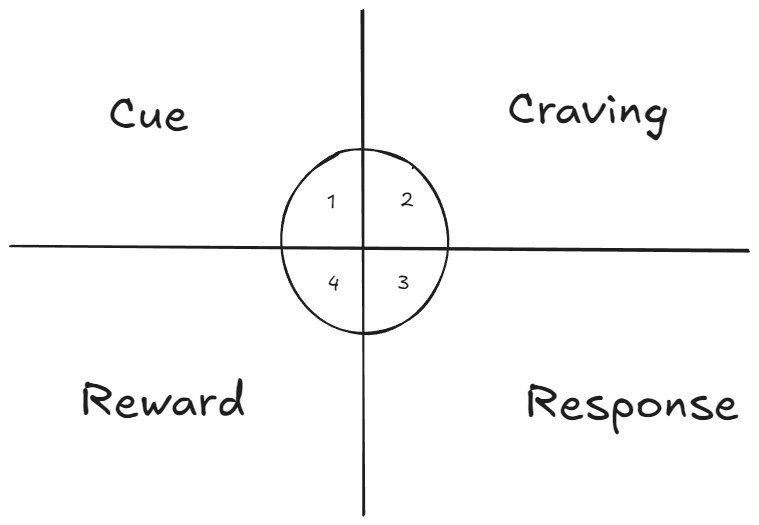
- Cue – Triggers the brain to start a behavior by signaling a reward.
- Craving – The motivation or desire to act.
- Response – The actual behavior performed.
- Reward – The satisfying result, which reinforces the behavior.
If there's no reward, the brain sees no reason to repeat the behavior. That's why reward is essential in habit formation.
Charles Duhigg, in The Power of Habit, uses a simpler model:
Cue → Routine → Reward.
In his model, James Clear's "Craving" and "Response" are combined into the "Routine" phase.
Habit Scorecard: Know Your Habits
Start by writing down all your habits - both good and bad - in a Habit Scorecard. Label each one like this:
- + for good habits
- – for bad habits
- = for neutral habits
This gives you a clear overview. Every habit serves a purpose - even the bad ones. Bad habits often feel good short-term but hurt long-term. Good habits might not be enjoyable right away, but they lead to better outcomes. Hang this list somewhere visible. We'll refer back to it as we talk about removing bad habits and adding good ones.
Getting Started
Let's look at some proven methods from books like Atomic Habits, The Power of Habit, and Feel-Good Productivity. You don't need to use all of them - just experiment and see what works for you.
1. Implementation Intentions
This method helps you specifically plan your habits.
Instead of saying:
"I'll go for a walk tomorrow."
Say:
"I will go for a 30-minute walk at 7:00 AM in the park near my apartment."
You now have a clear when and where - which makes it more likely you'll follow through. Write your intentions down in your journal or digital planner, and schedule them into your calendar.
2. Habit Stacking
Attach a new habit to one you already have.
For example:
"After I sit down at my desk to start my computer, I will read a book for 20 minutes."
You're building on an existing routine, which makes the new habit easier to remember and maintain.
3. Reduce Friction
Make your good habits easier and more obvious. Let's say you want to read more. Place your book somewhere visible - like on your desk. When you sit down, you'll see it and think, "Ah, I need to read."
You've:
- Created a visible cue
- Reduced effort (no need to find the book)
- Increased likelihood of acting
4. Shrink the Habit
Use the Two-Minute Rule: shrink your new habit down to something that takes 2 minutes or less.
Instead of:
"I'll read for 20 minutes."
Try:
"I'll read one page."
Consistency matters more than intensity. Once it's easy to start, you'll naturally increase the time.
A habit must be established before it can be improved.
5. Track It
After you've started building a new habit, you might find it difficult to stick with it - and that's completely normal. One effective way to stay consistent is to track your habits. Habit tracking is a simple method to measure your progress and serves as evidence that you're moving forward. But why should you start tracking?
Why Habit Tracking Works:
- It's Obvious
- It helps you overcome the "I thought I was doing fine" blindness by showing actual consistency.
- It's Attractive
- It triggers your desire to keep the momentum going - a form of positive reinforcement.
- It's Satisfying
- That small win can be enough to keep you going.
And if you ever miss a day?
That's okay - just don't miss twice.
Missing once is a slip. Missing twice is the start of a new habit - the habit of not showing up.
Say Bye to Bad Habits
Let's now look at how to break bad habits.
1. Add Friction
Make bad habits harder by adding small barriers.
Example: Want to reduce YouTube time?
- Use tools like Cold Turkey Blocker
- Use browser extensions like Unhook to hide recommendations
Now, to watch YouTube you have to:
- Disable the blocker
- Turn off the extension
- Refresh the page
That extra effort gives your brain a moment to pause.
2. Make It Unsatisfying
Bad habits are tempting because they feel good short-term. To counter this, add a real cost.
Example:
If you exceed 30 minutes of social media use, pay a friend €5.
Now there's a consequence - and giving away money hurts more than scrolling feels good.
3. Replace the Habit
Instead of removing a bad habit, replace the routine while keeping the cue and reward.
Old Habit Loop
- Cue: Boredom
- Routine: Scroll on phone
- Reward: Mental stimulation
New Habit Loop
- Cue: Boredom
- Routine: Stretch, walk, or look outside
- Reward: Mental reset
Same cue, same reward - just a healthier routine.
You can also add friction by putting your phone in another room while working.
Final Thoughts
There’s a lot more to explore about habits, and I may have missed a few things. But this blog was meant to give you a quick, practical recap of key ideas from Atomic Habits and The Power of Habit - with a focus on building good habits and breaking bad ones.
I hope you found something useful - even a small change can lead to big results over time.
That’s how real transformation begins.
Have a good reading :)